
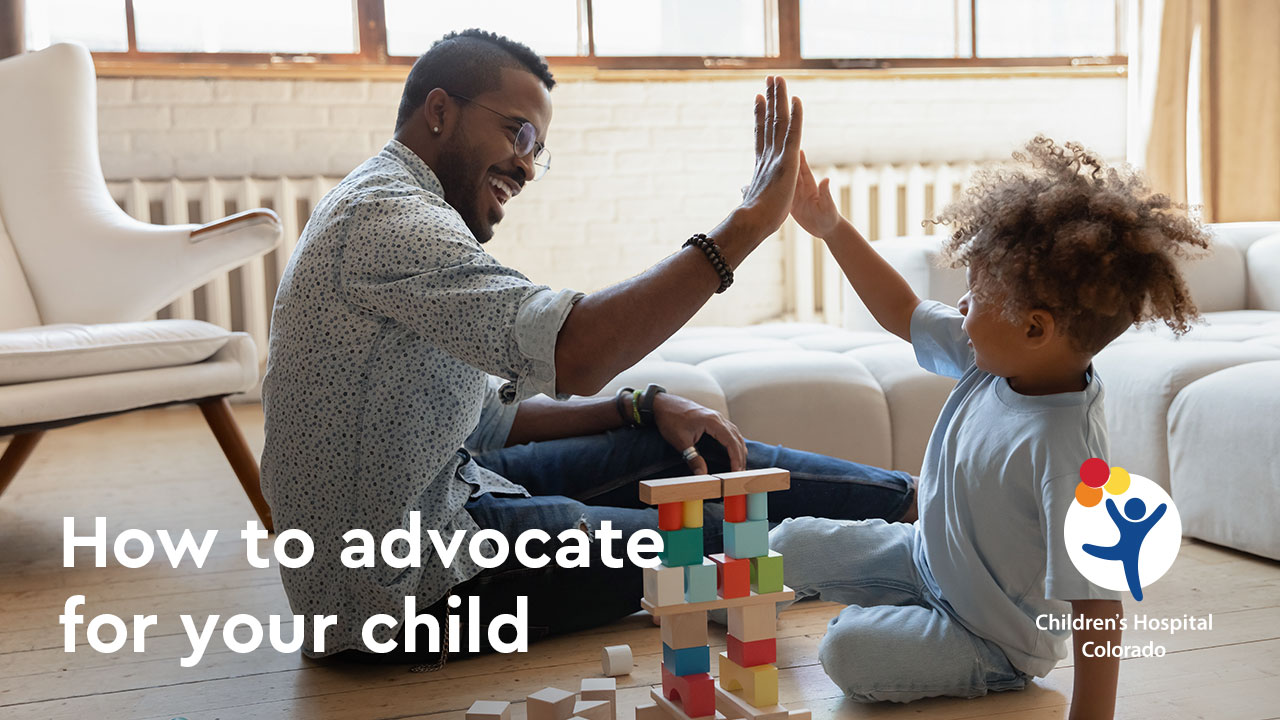
Advocating for your child is one of the most important roles a parent or caregiver can take on, but it can also feel overwhelming at times. From healthcare visits to school conversations and social situations, ensuring your child’s needs are heard often requires stepping in and speaking up. To help guide families, pediatric experts from Children’s Hospital Colorado share practical advice on how parents can advocate for their children while also teaching kids the confidence and skills to advocate for themselves.
As a parent, one of the most important — and sometimes challenging — things you may do is advocating for your child’s physical and emotional well-being. This means you’re stepping up and taking action to support their best interests in healthcare settings, school, politics and even in interactions with other parents and kids.Childrens' voices aren't always heard, and sometimes they need adults to speak up on their behalf. Even better, children need to see advocacy modeled by their trusted caregivers so they can learn how to effectively advocate for themselves in the future. Here, our pediatric experts share answers to questions on how parents and caregivers can best advocate for their children in every setting.
How to advocate for your child in healthcare
Your child has rights as a patient and you also have rights and responsibilities as a parent. Some of those rights include taking part in all decisions regarding your child's care and treatment, asking questions freely; whether to ask to see another doctor, get a second opinion or change doctors or hospitals; and asking for things to be explained more clearly if you don’t understand fully. Read more about patient/parent rights and responsibilities. We work closely with parents and family members and provide several services and resources to help make difficult experiences, such as getting shots, as easy as possible. Read more about how we work with families at Children's Colorado
How to advocate for your child at school
It is not only appropriate, it's necessary! Being involved in your child’s education plays a powerful role in their academic success. If you’re wondering how to advocate for your child at school, keep in mind that you and your child's teacher should work together to develop plans that make the school experience as positive as possible.
Regular communication with your child's teacher can help shed light on any problems or issues your child is having in the classroom, as well as assure you how your child is doing in school. While in-person conferences aren't always feasible, there are alternative ways to connect with your child's teacher, such as sending notes back and forth in your child's backpack, emailing or even trading voicemail messages.
How do I teach my child to advocate for themselves?
Advocating for your child means teaching them how to advocate for themselves, and it's never too early to start teaching these skills. Sticking up for oneself is an important tool needed to achieve goals and become a successful young adult.
Begin this conversation by teaching self-awareness. Explain the importance of being able to explain your thoughts and feelings to others in order to communicate needs. Parents can put this into practice in everyday life by providing a safe space for kids and teens to talk about what they need. Problem-solving is another important skill to teach children early. Practice these communication skills by asking your child to think about what they want the outcome to be, and then help them brainstorm ways to get there. Help your child learn good communication skills and show them how to be assertive and communicate their needs and wants in a clear, calm and respectful way. Teach your child how to handle instances of conflicts with others; in particular, how to respond to negative comments in a diplomatic and confident way, even when it’s scary.

 English
  Spanish